How to Plan an International Trip from India: A Step-by-Step Guide
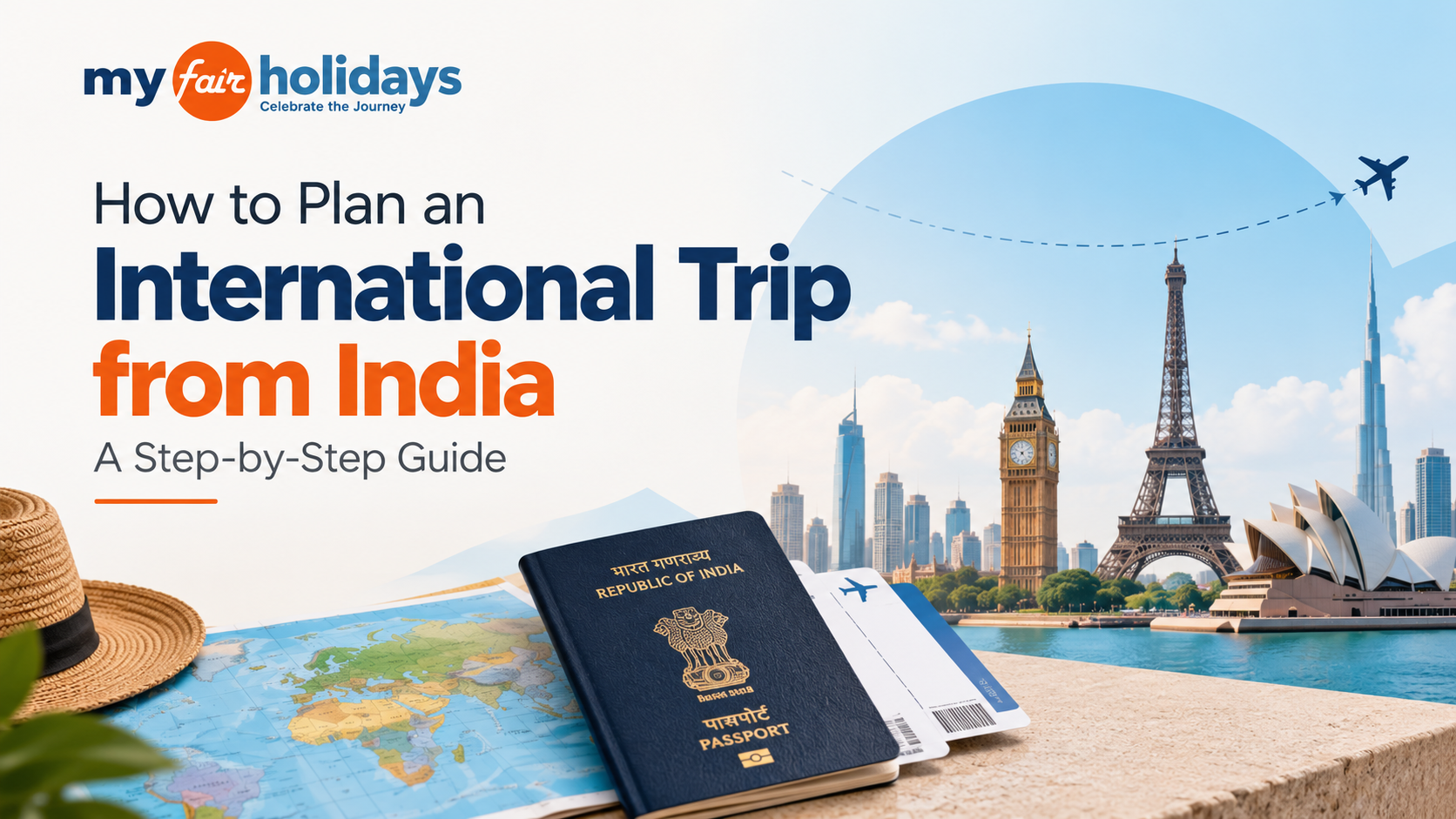
How to Plan an International Trip from India: A Step-by-Step Guide
Quick answer: To plan an international trip from India, (1) set your budget and travel dates, (2) pick a destination, (3) check passport validity and visa rules, (4) book flights and hotels, (5) arrange forex and travel insurance, (6) build your itinerary, and (7) pack and complete pre-departure checks. Start 2 to 3 months ahead for most destinations, and 3 to 4 months ahead for visa-heavy regions like Europe.
Dreaming of Bali beaches, Dubai skylines, Thai street food or the Swiss Alps? Your first trip abroad is exciting, but it also comes with questions. Do you need a visa? How much money should you carry? Should you book a tour package or plan on your own?
This guide walks you through how to plan an international trip from India, one step at a time, with practical tips from the travel experts at MyFairHolidays.
Step 1: Decide Your Budget and Travel Dates
Every good international trip starts with two numbers: how much you can spend and when you can go.
How much does an international trip from India cost?
Costs vary widely by destination, season and travel style. As a rough guide for a 5 to 7 day trip per person (flights included):
- Budget trips (Thailand, Vietnam, Sri Lanka, Nepal, Bali): roughly ₹40,000 to ₹80,000
- Mid-range trips (Dubai, Singapore, Malaysia, Maldives): roughly ₹70,000 to ₹1,50,000
- Premium trips (Europe, Japan, Australia, USA): roughly ₹1,50,000 and above
These are indicative ranges. Always get a current quote before finalising.
What to include in your budget
- Return airfare
- Accommodation
- Visa fees and service charges
- Local transport and airport transfers
- Food and activities
- Travel insurance
- Shopping and a 10 to 15% buffer for surprises
Pick the best time to travel
Check the weather and peak season of your destination. Travelling in the shoulder season (just before or after peak) usually means lower prices and fewer crowds. Also check Indian school holidays and long weekends, since flight and hotel prices rise sharply around Diwali, Christmas and summer vacations.
Step 2: Choose the Right Destination
The best destination for you depends on your budget, interests, trip length and visa convenience.
Best countries for first-time international travellers from India
- Thailand: Beaches, nightlife, food and great value for money
- Dubai (UAE): Short flight, luxury experiences, easy for families
- Bali (Indonesia): Island vibes, temples, honeymoon-friendly
- Singapore and Malaysia: Clean, safe, well connected, family-friendly
- Sri Lanka and Nepal: Close to India with simple entry processes
- Europe and Japan: Best for bucket-list trips with more planning time
Match destination to travel style
- Honeymoon: Maldives, Bali, Switzerland, Mauritius
- Family trip: Singapore, Dubai, Malaysia, Thailand
- Friends or bachelor trip: Thailand, Vietnam, Bali, Dubai
- Solo travel: Thailand, Japan, Singapore, Sri Lanka
Not sure where to go? Browse our curated international tour packages from India to compare destinations, durations and prices in one place.
Step 3: Check Your Passport Validity
Your passport is the single most important document for international travel.
What are the passport rules for international travel from India?
- Your passport should generally be valid for at least 6 months from your date of entry.
- It should have at least 2 blank pages for stamps and visas.
- Name and details must match your flight tickets and visa application exactly.
Don't have a passport yet?
Apply through the Passport Seva portal. Normal processing can take a few weeks, so apply well before you plan to book flights. If you need to renew, do it before you pay for any non-refundable bookings.
Step 4: Sort Out Your Visa
Visa rules are the part that confuses most first-time travelers, and they change often. Always confirm current rules on the official embassy or immigration website of your destination before you book.
Types of entry for Indian passport holders
- Visa-free entry: Some countries allow Indian passport holders to enter without a visa for a limited stay, subject to their current policy.
- Visa on arrival (VoA): You get the visa at the airport on landing, usually with documents and a fee.
- e-Visa: Apply online and receive approval by email before you fly.
- Sticker visa (embassy or consulate): Needed for destinations like the Schengen area, UK, USA, Canada and Australia. This takes the longest.
Documents usually required for a visa
- Valid passport and passport-size photographs
- Confirmed flight and hotel bookings (or itinerary)
- Bank statements and income proof (ITR, salary slips)
- Travel insurance (mandatory for Schengen)
- Cover letter and day-wise itinerary
How early should you apply?
- e-Visa or VoA destinations: 1 to 3 weeks before travel
- Schengen, UK, USA, Canada, Australia: 2 to 3 months before travel, since appointment slots can fill up fast
If you want hassle-free paperwork, our visa assistance services guide you through documents, forms and appointments.
Step 5: Book Your Flights
Flights usually take the biggest share of your budget, so book smart.
Tips to get better flight deals
- Compare prices across multiple days and airlines before booking.
- Book 6 to 10 weeks ahead for most international routes, and earlier for peak season.
- Fly mid-week (Tuesday to Thursday) when fares are often lower.
- Consider connecting flights if you are flexible, since direct flights can cost more.
- Check baggage allowance, meal, and seat charges, especially on low-cost airlines.
- Make sure the name on your ticket matches your passport exactly.
Should you book flights before the visa is approved?
For visa-free, VoA, and e-Visa destinations, it is usually safe to book. For sticker-visa countries, prefer refundable or flexible tickets, or use a dummy or provisional itinerary for the application until approval comes through.
Step 6: Book Hotels and Stays
How to choose the right hotel
- Stay close to the main attractions or a metro or transport hub to save travel time and money.
- Read recent reviews, not just the overall rating.
- Check what is included: breakfast, airport transfers, Wi-Fi, and free cancellation.
- Choose a location that feels safe, especially for solo women and family travellers.
Hotel, resort, hostel, or apartment?
- Hotels and resorts: Best for convenience, families, and honeymooners
- Hostels: Budget-friendly for solo travelers and backpackers
- Serviced apartments: Good for longer stays and groups
Look for free-cancellation options until your visa and flights are confirmed.
Step 7: Decide Between a Tour Package and DIY Planning
This is one of the most searched questions by first-time travellers: is a tour package better than planning an international trip yourself?
Tour package: pros and cons
Pros
- Flights, hotels, transfers, sightseeing, and often visa support in one booking
- Easier budgeting with fewer surprise costs
- Local support if something goes wrong
- Often better group and bulk rates
Cons
- Less flexibility on fixed itineraries (though customized packages solve this)
DIY planning: pros and cons
Pros
- Full control over every detail
- Can be cheaper if you have time and experience
Cons
- Time-consuming research and many separate bookings
- Higher risk of errors, especially with visas and connections
Which one should you choose?
First-time international travellers, families, honeymooners and people short on time usually benefit from a package. Experienced travellers who enjoy planning may prefer DIY. A customised package gives you the best of both: your preferences, with an expert handling the logistics. Explore our customised holiday packages to build a trip around your dates and budget.
Step 8: Plan Forex, Cards and Payments
How to carry money abroad
Use a mix of payment methods instead of relying on one:
- Forex card (prepaid): Good exchange rates and a safe backup
- International debit or credit card: Make sure international usage is enabled before you fly, and check foreign transaction fees
- Some local cash: Handy for taxis, street food and small shops
- UPI: Some destinations now accept UPI payments, but do not rely on it alone
Things to know
- Money you send or spend abroad falls under the RBI's Liberalised Remittance Scheme (LRS). Tax collected at source (TCS) may apply on overseas spending and tour packages, and the rules and rates are updated from time to time, so check the current provisions or ask your bank or travel advisor.
- Inform your bank about your travel dates to avoid card blocks.
- Avoid exchanging large amounts at the airport, where rates are usually less favourable.
Step 9: Buy Travel Insurance
Is travel insurance necessary for international trips from India?
It is strongly recommended for every international trip, and mandatory for some destinations such as the Schengen area.
What a good travel insurance policy covers
- Medical emergencies and hospitalisation abroad
- Trip cancellation or interruption
- Lost, delayed or stolen baggage
- Passport loss
- Flight delays
Medical care abroad can be very expensive, so insurance is a small cost for a lot of peace of mind. Buy it right after booking your trip, so that cancellation cover is active.
Step 10: Build Your Itinerary and Pack Smart
How to create a day-wise itinerary
- Group nearby attractions on the same day to cut travel time.
- Do not overpack your schedule. Leave free time for rest and spontaneous plans.
- Book popular tickets in advance (theme parks, cruises, observation decks, shows).
- Keep your first and last day light, to handle arrival fatigue and departure timing.
- Save offline maps and key addresses on your phone.
International trip packing checklist
- Passport, visa, tickets and hotel confirmations (digital and printed copies)
- Forex card, cards and some cash
- Universal travel adapter and power bank
- Basic medicines and prescriptions
- Weather-appropriate clothing and comfortable shoes
- Photocopies of important documents stored separately
- Local SIM, eSIM or an international roaming pack
Final pre-departure checks (1 week before)
- Check in online and confirm baggage rules.
- Reconfirm hotel bookings and airport transfers.
- Review entry requirements one last time, since rules can change.
- Share your itinerary with family or friends.
Common Mistakes First-Time International Travellers Make
- Leaving the visa application too late
- Booking non-refundable tickets before visa approval
- Ignoring passport validity rules
- Not enabling international usage on cards
- Over-packing the itinerary
- Skipping travel insurance
- Not keeping digital and physical copies of documents
Sample Timeline: When to Do What
|
Time Before Travel |
What to Do |
|---|---|
|
3 to 4 months |
Set budget, pick destination, check passport, start visa process for sticker-visa countries |
|
2 to 3 months |
Book flights and hotels, apply for visa |
|
1 month |
Buy travel insurance, plan itinerary, book activities |
|
2 weeks |
Arrange forex, confirm bookings, start packing |
|
1 week |
Online check-in, final document check, inform bank |
Plan Your Next International Trip with MyFairHolidays
Planning an international trip from India does not have to be stressful. With the right steps in the right order, you can save money, avoid last-minute surprises and enjoy the trip from the moment you start planning.
At MyFairHolidays, we help you with destination selection, flights, hotels, visas, sightseeing and complete trip planning. Whether it is a honeymoon, a family vacation or a trip with friends, our team builds a plan around you. Contact our travel experts today for a free, no-obligation quote.
Frequently Asked Questions (FAQs)
How do I plan my first international trip from India?
Start by setting a budget and travel dates, choose a destination, check your passport and visa requirements, book flights and hotels, arrange forex and insurance, and then finalise your itinerary. Beginners often find a tour package the easiest way to start.
How much money do I need for an international trip from India?
A 5 to 7 day trip typically costs between ₹40,000 and ₹1,50,000 per person for popular destinations, and more for Europe, Japan, Australia or the USA. Your actual cost depends on the season, hotel category, activities and flights.
Which is the cheapest international destination from India?
Nepal, Sri Lanka, Thailand, Vietnam and Bali are among the most budget-friendly destinations for Indian travellers, thanks to short flights, affordable stays and good exchange value.
How early should I book an international trip?
Book 2 to 3 months ahead for most destinations, and 3 to 4 months ahead for Europe, the UK, USA, Canada and Australia, since visa appointments take time.
Do I need a visa to travel abroad from India?
It depends on the country. Some offer visa-free entry, some offer visa on arrival or e-Visa, and others require a sticker visa from an embassy. Always check the latest rules on the official government website before booking.
Is a tour package better than planning on my own?
For first-time travellers, families and people with limited time, a tour package is usually simpler and more predictable. DIY planning suits experienced travellers who want complete control.
What documents are needed for international travel from India?
A valid passport (6 months or more validity), visa if required, flight tickets, hotel bookings, travel insurance, forex or cards, and ID and income proofs for visa-heavy destinations.
Is travel insurance mandatory?
It is mandatory for the Schengen area and highly recommended for all other international trips.